Électrification du transport lourd : rêve ou réalité en 2026 ?
Longtemps considérée comme un objectif lointain, l’électrification du transport lourd s’impose aujourd’hui comme une priorité stratégique. Entre évolutions réglementaires, pressions environnementales, innovations technologiques et limites opérationnelles, où en est réellement le secteur en 2026 ? Faisons le point sur les avancées concrètes et les défis persistants.
Pourquoi électrifier le transport lourd ?
Le transport routier de marchandises représente une part importante des émissions de CO₂ en Europe. Pour atteindre les objectifs climatiques fixés par l’Union européenne et répondre à la demande des donneurs d’ordres engagés dans des démarches RSE, l’électrification devient incontournable.
Les bénéfices attendus :
- Réduction des émissions de gaz à effet de serre
- Amélioration de la qualité de l’air, notamment en zones urbaines
- Réduction des nuisances sonores
Un marché en transition, pas encore en rupture
En 2026, plusieurs signaux montrent une dynamique forte :
- Les premiers poids lourds 100 % électriques sont en circulation sur les courtes et moyennes distances (livraisons urbaines, plateformes logistiques).
- Les grands constructeurs (Volvo, Mercedes, Renault Trucks, Scania…) multiplient les annonces de gammes électriques.
- Des appels d’offres publics incluent désormais des critères d’électrification dans la logistique.
Mais la bascule massive n’a pas encore eu lieu. En cause :
- Prix élevé des véhicules électriques lourds
- Autonomie encore limitée (300 à 500 km maximum)
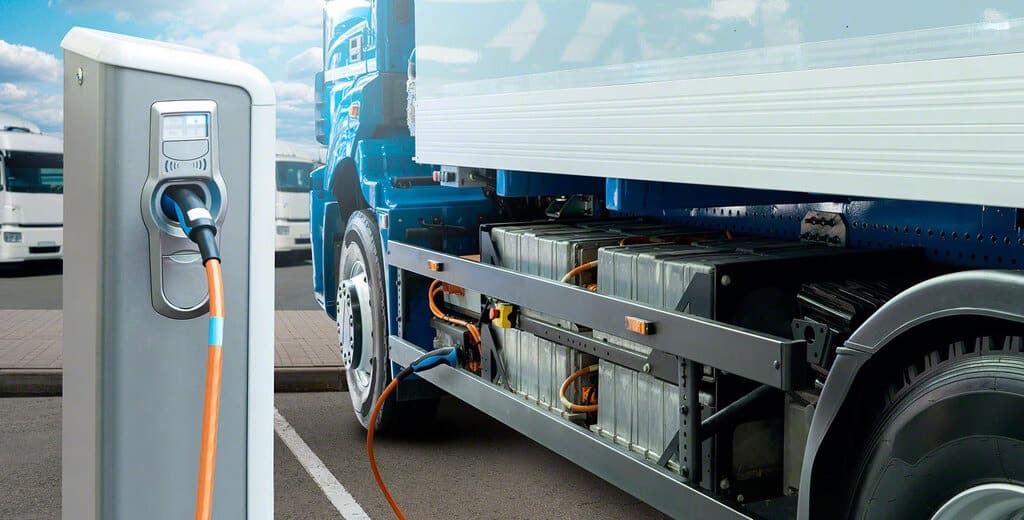
- Poids des batteries impactant la charge utile
Besoin d’un réseau de recharge rapide et structuré à l’échelle nationale
L’électrique, adapté à tous les usages ?
Pas encore. En 2026, l’électrification est surtout viable pour les trajets régionaux ou urbains.
Pour les longues distances (transport national ou international), d’autres solutions sont encore à l’étude ou en test :
- Le biogaz
- L’hydrogène (fuel cell)
- Les carburants de synthèse (e-fuels)
- L’intermodalité rail-route ou fleuve-route
Les transporteurs doivent donc faire des choix technologiques avec prudence. Beaucoup adoptent une stratégie de flotte mixte, intégrant progressivement des camions électriques dans les usages compatibles.
Quel rôle pour les territoires et les infrastructures ?
L’électrification du transport lourd ne peut réussir sans un effort massif d’infrastructure :
- Bornes de recharge adaptées aux gabarits PL
- Stations multimodales pour les entreprises logistiques
- Schémas directeurs régionaux pour accompagner les transporteurs
Les collectivités locales jouent un rôle central en 2026 : accompagnement à l’investissement, soutien au foncier logistique, intégration aux ZFE.
Des initiatives comme Plug & Go, France Logistique ou les Territoires à énergie positive renforcent l’écosystème.
Le transporteur face au défi économique
L’électrification du transport lourd reste un enjeu de rentabilité :
- Le coût d’acquisition est encore 40 à 100 % supérieur à un modèle diesel équivalent.
- Les aides publiques (bonus, suramortissement, appels à projet ADEME) sont essentielles pour amortir l’investissement.
- Le TCO (coût total de possession) devient plus compétitif avec l’augmentation du prix du diesel et les avantages fiscaux liés aux ZFE.
Les transporteurs les plus avancés sont ceux qui intègrent la transition dans leur proposition commerciale et leur positionnement auprès de leurs clients.
Euromove 2026 : la transition en action
Le salon Euromove consacre un espace important aux nouvelles motorisations, aux solutions de recharge et aux véhicules électriques lourds.
👉 Des démonstrations de camions électriques auront lieu sur le circuit d’essai.
👉 Des tables rondes réuniront transporteurs, constructeurs et collectivités pour évoquer les freins, les succès et les perspectives.